Endurance training,
finally intelligent.
AI coaches that build your cycling and running plan, learn from every session, and adapt when your body tells them to.
7-day free trial · no card
Today
Recover well. Nothing planned for today.
Classic aerobic base run at 65-75% threshold speed. Builds mitochondrial density and fat oxidation. The pace...
0% of this week's plan completed.
Coach check-in
Today is a complete rest day to let your body absorb the training load and prepare for tomorrow's 1.20h Half-Marathon pace session.

Use this recovery time to focus on mobility, ensuring your posterior chain is ready for the maintenance work scheduled for tomorrow.
Your sleep quality of 5/5 at 8.5 hours is an excellent foundation for the taper phase as we monitor your recovery metrics today.
Your overview
Capacity
42-day rolling load
Strain
7-day rolling load
Freshness
Deep block
Momentum
Capacity is building
Phase Progress
Week 9 of 12
Aerobic base
Week 1–4Building basic aerobic endurance and initial muscular adaptation to running.
Build
Week 5–8Threshold development and improved cardiovascular efficiency at moderate paces.
Peak sharpening
Week 9–11Race-specific intensity and neuromuscular sharpening.
Taper
Week 12Volume reduction with maintained intensity for peak performance.
Training Consistency
Each square is a day · last 6 months
Three AI coaches that work as one team. Endurance, strength, and nutrition, working together on every decision.
Marco
Endurance
Builds your training plan and guides you week by week. Periodization, volume, intensity, all handled.
Lucas
Strength & conditioning
Programs strength work and injury prevention for endurance athletes. Minimum dose, maximum results.
Ana
Sports nutrition
Manages your fueling, hydration, and race-day nutrition. Practical, no guesswork.
Plans that build themselves. Periodized, adaptive, science-driven.
Set your goal event and available hours. Your coaches handle periodization, intervals, recovery weeks, and weekly adjustments.
April 2026
Month summary
Every session, reviewed. Feedback that adjusts your plan.
Power consistency, zone discipline, pacing, HR drift. Your coaches break it down and adjust what comes next.
Post-workout insights
Every session gets read by three coaches. They tell you what worked, what didn't, and what to do about it.
Marco
Endurance
Nailed the pacing. HR drift stayed under 4%, which means the aerobic engine is still absorbing load without breaking down.
Lucas
Strength
Legs look fresh after the taper. Add 2×6 split squats Thursday to reinforce single-leg stability before the race block.
Ana
Nutrition
Your fueling held through the second half. Pre-load 60g of carbs 90 minutes before tomorrow's tempo so you arrive with full tanks.
Workout data
Every metric from your wearable, side by side. Planned vs actual, no spreadsheet required.
Workout breakdown
Every chart from your workout, plotted second-by-second. Coaches read drift, recovery, and effort shape from this.
Heart rate over time
How did you feel?
Your subjective signal trains the coaches over time, so they learn what your scale of hard really means.
Perceived exertion (RPE)
3/5 · Hard
They remember everything. Context that compounds over time.
Every conversation, injury, and pattern shapes how they coach you. Advice gets sharper the longer you train and the more they get to know you.
Marco
Endurance Specialist
Wednesday's threshold test closes out your base phase. Worth flagging: last time you ran threshold (Jan 14), your left knee tightened up for 2 days after, and in February you said Ana's fueling timing made the rebound a lot easier.
So I've pulled her in for Tuesday and Wednesday. If the knee holds, this test resets your Z2 and Z4 paces. You're 8 weeks clean since PT.
Ana
Nutrition Specialist
Picking up from Marco. Your Tuesday evening runs have been coming in harder than the data predicts: on 4 of the last 5, your RPE was a step above what your HR and pace showed. In March you mentioned breakfast got spotty after your Monday meetings moved to 8am, so let's put something real in on Tuesday morning. Oats, yogurt, peanut butter. Same again Wednesday pre-test, plus a small OJ. Workable?
Marco
Endurance Specialist
Good. I'm logging this as your first hard effort post-rehab, so flag anything Thursday morning and I'll cut Thursday's session back.
Target 170 to 175 HR for 20 minutes. Last test (Jan 14) you opened at 178 and blew up around minute 12, so hold back the first 5, then push. You've done this before.
Ask your coaches anything (# to reference workouts, @ to mention a coach)
Your data, visualized. 30+ widgets, ready on day one.
From training load to recovery, sleep to heart rate zones. Charts built for athletes, not generic dashboards.
Capacity
42-day rolling load
Strain
7-day rolling load
Freshness
Deep block
Training Load
Capacity, Strain and Freshness · 90 days
Training Consistency
Every square is a day · 6 months
Momentum
Capacity is building
Load Domains
54% of Load from aerobic this week
Readiness
Train lighter
Recovery Profile
Fast recoverer
HRV Trend
Heart rate variability · 30 days
Sport Mix
Time distribution · 4 weeks
Weekly Training Load
Load per week · planned vs actual
Time in HR Zones
Stacked breakdown · 4 weeks
Sleep
Quality and duration · 7 days
ACWR · Acute : Chronic
7-day load vs 28-day average
Power Profile
Mean maximal power · this block vs last
Phase Progress
Week 9 of 12
Aerobic base
Week 1–4Basic aerobic endurance and initial muscular adaptation.
Build
Week 5–8Threshold development and cardiovascular efficiency.
Peak sharpening
Week 9–11Race-specific intensity and neuromuscular sharpening.
Taper
Week 12Volume reduction with maintained intensity for peak performance.
Race day, dialed in. Preparation distilled into a plan.
Pacing strategy from your power data, fueling from your metabolic profile, weather-adjusted gear. Updated daily.
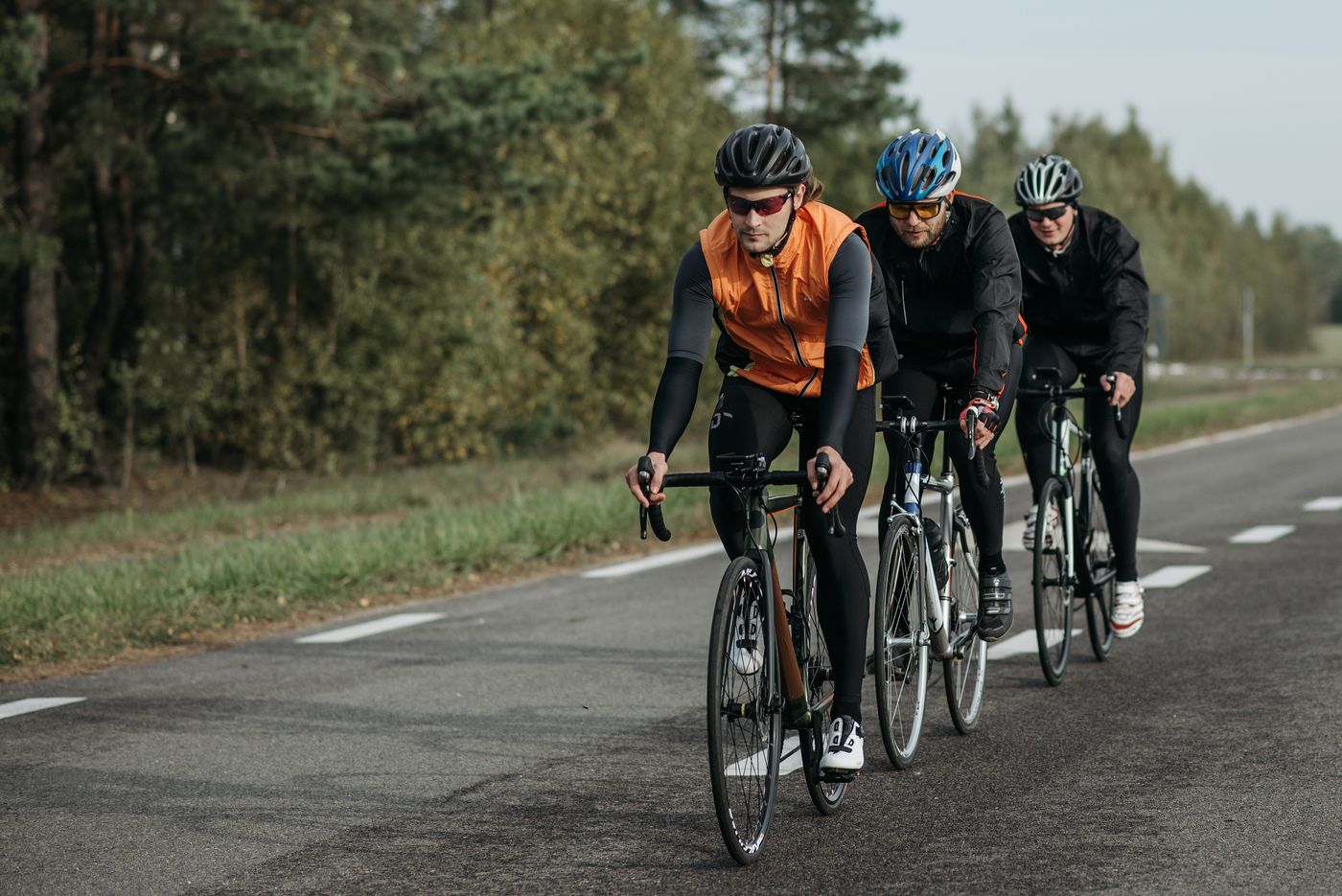
SBT GRVL
Race Readiness
Solid line is your actual fitness. Dashed line projects where your training is heading. The dashed horizontal is the CTL you need to hit on race day.
- Hit 55 CTL by race week
- Two sharpening intervals remaining
- Taper starts 10 days out
Race Day Weather
Race-day forecast, with gear recommendations that sharpen as the day nears.
Wind
8 mph NE
Humidity
40%
Rain
10%
Pacing Strategy
Power targets by segment, drawn from your FTP and the course profile. Hold these to land inside the estimated finish window.
Course
Full elevation profile with every climb detected and categorized. Red segments mark the hard ones; hover anywhere for distance, elevation, and gradient.
4 climbs detected
Rabbit Ears Pass
CAT 33 mi · 6.4% · +1,096 ft
Buffalo Pass
CAT 26 mi · 7.2% · +2,103 ft
Cow Creek
CAT 42 mi · 5.1% · +518 ft
Final Kicker
CAT 43 mi · 4.8% · +663 ft
Race Fuel Plan
Carbs per hour, hydration rate, and total energy expenditure, dialed to your metabolic profile. Every feed zone placed before it matters.
Carbs
75 g/h
8 gels total
Hydration
750 ml/h
4 bottles
Energy
3,280 kJ
total expenditure
Feed zones on route
Schedule
- Start → mile 9, Water only. Start eating before the first climb.
- Every 25 min, 1 gel (25g carbs). Alternate flavors to avoid fatigue.
- Every 45 min, 1 bottle electrolyte mix (500ml, 40g carbs).
- Mile 75, Caffeine gel (75mg). Final push fuel.
- Final 8 mi, Increase to 90g/h. Last gel at mile 81.
Based on your athlete profile and estimated race duration.
Syncs with your gear. Automatically, both ways.
Structured workouts push to your Garmin, Wahoo, Coros, or Hammerhead. Activities sync from Strava. Recovery data flows from WHOOP. Zero manual input.
Strava

Activities sync automatically
Garmin

Workouts push to your device
Wahoo

Workouts push to your bike computer
Coros

Workouts sync to your watch
Hammerhead

Workouts push to your Karoo
WHOOP

Recovery data flows in daily
Questions, answered. Everything worth asking upfront.
The coaches, the plans, the data, the price. No fine print, no buried caveats.
Who actually coaches me?
Three AI coaches working as one team. Marco handles endurance and periodization, Lucas handles strength and injury prevention, Ana handles nutrition and race fueling. They see what the others are doing, so recommendations fit together across the week.
What do I need to get started?
Nothing fancy. Start your 7-day free trial — no card needed — pick a goal event (or just a "get fitter" goal), and either connect a device or enter your FTP and zones by hand. The coaches work with whatever you give them and fill the gaps as more data comes in.
How are training plans built?
A macro agent drafts the block (base, build, peak, taper) with Load targets and intensity distribution. A reviewer agent then stress-tests it against sports-science rules before it reaches you. Zones calibrate to your FTP and metabolic profile, not a generic template.
Do plans actually adapt, or is it just a static calendar?
Every completed session, recovery signal from WHOOP, and chat message can shift what comes next. If you sleep poorly or skip a session, the coaches rewrite the rest of the week. Plans are living, not locked.
What if I don't have a power meter?
Heart rate works. Pace works. Power is nice but not required. Zones calibrate to whatever signal you train with, and the coaches read the session from whatever data your device recorded.
What happens if I get injured or miss a week?
Tell the coaches. They rebuild the block around the gap. No guilt-trips, no piling missed sessions back onto the next week, no punishment intervals. Injuries and life events are just context they factor in.
What is metabolic profiling, and do I need a lab?
No lab test. We estimate VO2max and VLaMax from regular training data using the Mader model. That drives personalized zones, fat/carb oxidation predictions, and fueling recommendations tuned to how you actually metabolize energy.
What do the coaches remember about me?
Conversations, injuries, preferences, travel, life events, patterns in your data. Memory compounds, so advice gets sharper the longer you train. A weekly consolidation run prunes duplicates and contradictions so the memory stays clean.
Which sports and devices does Watts support?
Cycling and running today. Strava for activity sync; Garmin, Wahoo, Coros, and Hammerhead for structured workout push; WHOOP for recovery data. More integrations are in the pipeline.
Who owns my data? Can I export it?
You do. Everything is exportable, deletable, and never sold. Train somewhere else tomorrow and you take your full history with you.
How is this different from TrainingPeaks or Intervals.icu?
Those are dashboards. Watts is a coach. They show you numbers; we interpret them, plan around them, and actually talk to you about them.
What does it cost?
$9.99 per week, $24.99 per month, or $199 per year for full access. Every account starts with a 7-day free trial of the full product — no card needed. Cancel anytime.
Stop guessing.
Start training.
7 days free, no card needed. Subscribe when it earns it. Cancel anytime.